

Meta Description –
Learn how to choose a flexible CNA program in California. Discover what theory and clinical skills are covered and compare full-time, part-time, and weekend schedules to fit your busy life.
A full-time job, family care, or other daily commitments should never close the door to a healthcare career. For many people across California, becoming a Certified Nursing Assistant is the first real step into nursing, and the path now bends to fit a working life. This guide walks through how flexible nursing education programs operate in California, what online and part-time options are available, and how payment plans keep the cost within reach.
What flexible CNA training really means
Flexibility in CNA training comes down to two parts: the theory you complete and the clinical hours you spend in a care setting.
The theory portion covers patient care, safety, communication, anatomy basics, and the responsibilities of a nursing assistant. The clinical portion places you in a licensed facility where you practice supervised, hands-on skills.
The reason it is separated is to allow you to study the theory around your existing schedule and complete clinical hours in focused blocks. This structure is what allows people with day jobs, evening shifts, or caregiving duties to train without leaving their current responsibilities behind. Schools like SisuCare Education build their programs around this model so that working learners have a realistic way forward.
Flexible CNA program options that fit your schedule

Flexible programs let you pick the pace that matches your week. The theory hours are delivered through online nursing programs you complete remotely, and the clinical hours happen in person at a licensed facility. California requires supervised clinical practice, and that part cannot be replaced by online study. How you arrange both parts is where the real flexibility lives, and most learners pick from three schedule types.
Full-time Schedule
A full-time pace suits people who can give most of their week to training and want to finish quickly. You move through the online theory in concentrated study days and complete clinical hours in back-to-back sessions. At SisuCare Education, the self-paced theory track runs 69.12 hours, and the instructor-led track runs 60 hours, so a full-time learner can clear the theory portion fast and then focus on the 103 hours of clinical training.
With the online theory and in-person clinicals combined, the full-time CNA program takes up to 6 to 7 weeks to complete.
Part-time schedule
A part-time schedule works for people balancing a job or family responsibilities. This is what makes the part-time CNA program realistic for working learners. You study the online theory in the evenings or across smaller blocks during the week, and you spread clinical sessions over a longer period. The same theory hours and the same 103 hours of clinical training apply, with the timing stretched so it fits around regular work hours.
Across the online theory and in-person clinicals, a part-time learner completes the program in about 8 to 9 weeks.
Weekend schedule
A weekend schedule is designed for people who work weekdays and cannot set aside work hours for CNA training. It keeps your Monday through Friday free, so your current role stays untouched while you train to become a CNA.
SisuCare Education arranges clinical hours across a network of partner facilities so weekend learners can train close to home without taking time off work.
With the online theory completed during the week and the in-person clinicals handled on weekends, this track runs about 8 to 9 weeks.
Whichever schedule you pick, the program pairs online theory with in-person clinical blocks and runs between 6 and 9 weeks, depending on the pace, leaving room for work and family.
How to choose a flexible program
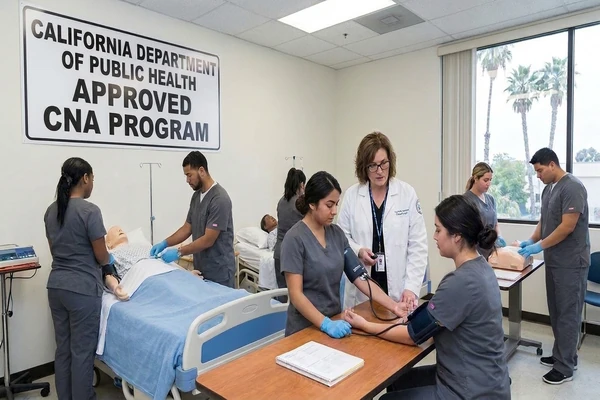
With several schools advertising flexible schedule nursing degrees and certifications, a short checklist keeps your search focused. As you compare programs, weigh these factors:
- State approval. Confirm the program is approved to meet California’s requirements and prepares you for the registry.
- Flexible Format options. Look for both self-paced and instructor-led theory so you can pick the one that fits your learning style.
- Clinical access. Check that clinical hours are scheduled in a way you can realistically attend and that partner facilities are reachable from where you live.
- Support. Strong programs offer guidance on the exam and the steps that follow.
SisuCare Education was designed with each of these points in mind, which makes it a useful reference point as you evaluate other options.
Become a CNA in just three steps –
The path from interest to certification is more straightforward than many expect:
- Choose your theory format. Decide between self-paced or instructor-led online study based on your weekly availability.
- Schedule your clinical hours. Pick a clinical schedule that fits around your job and confirm the location with the program.
- Complete the state exam. After your training hours are done, take the written and skills evaluation and join the California registry.
Frequently asked questions
Can I complete CNA training entirely online?
The theory portion can be completed online, but California requires supervised clinical hours in person. Flexible programs schedule those hours so they fit a working life.
How long does flexible CNA training take?
A full-time schedule takes 6 to 7 weeks, and part-time or weekend schedules run about 8 to 9 weeks. Each timeline covers the online theory and the in-person clinical hours.
Are payment plans available?
Yes. Many California programs, including SisuCare Education, offer installment-based plans so tuition can be paid over time rather than up front.
Do flexible programs meet state requirements?
A properly approved program delivers the full required theory and clinical hours. Flexibility changes the timing, not the total amount of training.